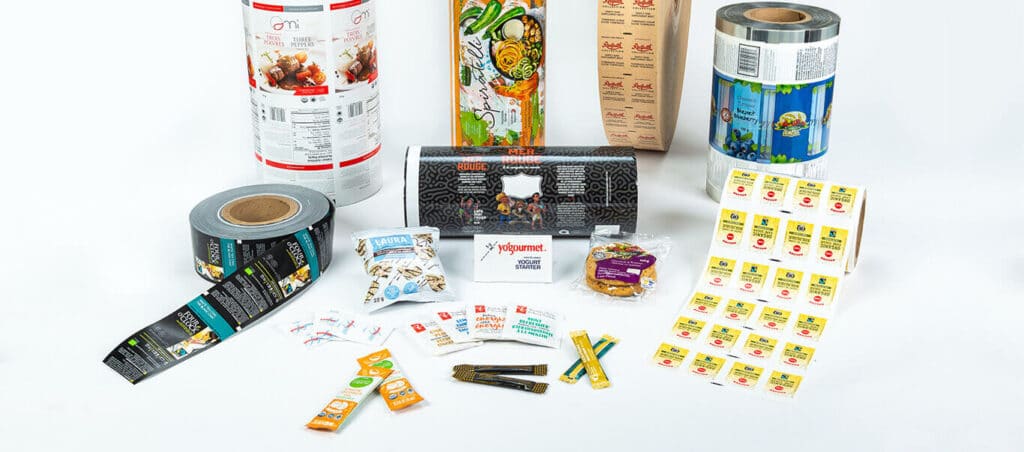
Roll stock print

To our dear clients

We want to take a moment to say thank you — for your trust, your support, and for being part of our story. Every client, every project, and every conversation has helped us grow and continue doing what we love most.

This first newsletter is our way of staying connected — to share updates, insights, and a little inspiration along the way. We’re excited for what’s ahead, and even more grateful to have you with us!

How to Choose the Right Film or Laminate for Your Food Product

A Practical Guide for Brand Owners
Learn how to choose the best film or laminate for your food packaging. Discover the pros and cons of OPP, MPET/poly, paper/poly/foil/poly, and more from the experts at Landry Flexible Packaging.
When it comes to food packaging, the material you choose plays a critical role in your product’s success. The right film or laminate protects your food, extends shelf life, and enhances your brand’s presentation.

At Landry Flexible Packaging, we specialize in helping food brands select high-performance, custom-printed materials that meet both technical and marketing goals. Here’s your step-by-step guide to choosing the right film or laminate for your food product.

Understanding Flexible Packaging Materials
Flexible packaging typically combines multiple material layers—known as laminates—to achieve the perfect balance of barrier protection, strength, and shelf appeal.

Each layer serves a purpose:

  • Outer layer: Provides printability and durability
  • Barrier layer: Blocks oxygen, moisture, or light
  • Sealant layer: Keeps the product fresh and prevents leaks

Different product types require different combinations. Let’s look at the most common structures used in the food industry.

OPP / Ink / OPP (Oriented Polypropylene)

Best for: Snacks, granola, confectionery, baked goods

Advantages:

  • Excellent moisture barrier for dry foods
  • High clarity and gloss for strong shelf appeal
  • Cost-effective and easy to run on most form-fill-seal equipment

Pro tip: OPP is ideal for lightweight, crunchy, or dry products that benefit from a clean, crisp appearance.

MPET / Ink / Poly / Aluminium / Polyethylene)

Best for: Coffee, nuts, powdered mixes, and dehydrated foods

Advantages:

  • Strong oxygen and light barrier without heavy foil
  • Metallic sheen adds a premium look
  • Lightweight and flexible

Pro tip: Choose MPET structures when you need longer shelf life and a high-end finish that still aligns with sustainability goals.

Paper / Poly / Aluminium / Poly

Best for: Soups, sauces, ready-to-eat meals, and spice blends

Advantages:

  • Combines paper’s natural texture with foil’s maximum barrier protection
  • Excellent resistance to grease, moisture, and heat
  • Ideal for products requiring extended shelf stability

Pro tip: If your product is sensitive to light, oxygen, or humidity, this multi-layer structure delivers superior protection.

PET / Ink / Poly (Polyester / Polyethylene)

Best for: Frozen foods, liquids, and sauces

Advantages:

  • High puncture resistance
  • Great optical clarity for vivid printing
  • Performs well across freezing and boiling temperatures

Pro tip: PET/Poly is a go-to choice for products that face extreme temperatures during storage or cooking.

Nylon / Poly or PET / Nylon / Poly

Best for: Meats, cheese, and vacuum-sealed products

Advantages:

  • Exceptional strength and flexibility
  • Excellent oxygen and aroma barrier
  • Compatible with vacuum and MAP (Modified Atmosphere Packaging)

Pro tip: Use this structure for products that require heavy-duty protection and extended freshness under vacuum conditions.

How to Select the Right Film or Laminate
Here are key factors to consider before making your choice:
Product Type & Sensitivity – Does your food need protection from oxygen, moisture, or light?
Desired Shelf Life – The more sensitive or long-lasting your product, the higher the barrier you’ll need.
Processing Conditions – Consider whether packaging will face heat, freezing, or pressure.
Brand Presentation – Think about print quality, gloss, texture, and how the package looks on the shelf.
Sustainability Goals – Ask about recyclable or mono-material films for eco-friendly packaging.
Cost & Production Efficiency – Balance performance with budget and equipment compatibility.

Why Partner with Landry Flexible Packaging ?
At Landry Flexible Packaging, we provide custom-engineered films and laminates tailored to your food product’s exact requirements. Our capabilities include:
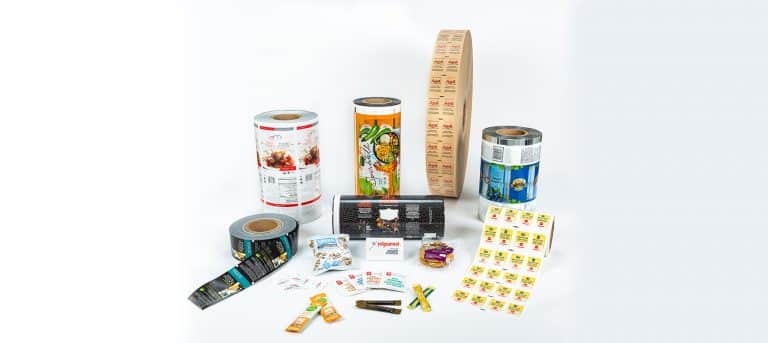
• OPP, PET, MPET, paper/poly, and foil laminates
• Custom rollstock and pre-made pouches
• High-definition printing for outstanding shelf appeal
• Food-grade and FSSC-22000 certified process
• Sustainable and recyclable material options
Our experts guide you from design through delivery—ensuring your packaging performs perfectly, looks beautiful, and aligns with your brand’s values.